
Fields in Shiawassee County Property Tax Records
BS&A links assessment and tax categories for Shiawassee County parcels. Read the values in context, since assessed value, state equalized value, taxable value, and a balance are separate facts on every record.
| Field | What It Shows | Where |
|---|---|---|
| Assessed value | Local assessment under Michigan rules | Assessor and Equalization |
| SEV | Value after equalization | Assessment card |
| Taxable value | Value to which millage applies | Tax record |
| PRE or exemption | Status reflected on the card | Assessor |
| Bill and status | Levy, payments, and delinquency | Local or county Treasurer |
Michigan generally assesses at half of true cash value. That figure is no sale-price estimate. A Shiawassee tax bill can show a taxable value below assessed value, because Proposal A caps annual growth under state rules until a transfer uncaps it.
Use the Shiawassee BS&A Tax Path
Start at the county BS&A portal for Shiawassee County. Choose Tax for a current record, Delinquent Tax for transferred amounts, or Assessing for values and exemptions; once found, the parcel number is the safest search key. Search by address, name, or parcel number.
| Choice | Input | Result |
|---|---|---|
| Address | Number and street | Matching parcel card |
| Name | Owner or taxpayer | Indexed parcels |
| Parcel | APN with leading zeroes | Exact administrative record |
| Service | Current or delinquent | Available bill fields |
Municipal start years on Shiawassee BS&A vary by unit. Read only the years the selected city or township displays, and ask the local assessor or Treasurer for older tax roll pages.
Separate Shiawassee Owner and Taxpayer Fields
Every Shiawassee parcel card keeps Property Owner, Taxpayer, mailing address, and property address in separate fields. They often match. A trust, estate, or land bank can split them. One Mallard Circle card, for example, names the Shiawassee County Land Bank Authority as owner and taxpayer, places the parcel in Owosso, and lists a Corunna mailing address. Legal location, assessing unit, and mail destination can all differ. Confirm disputed ownership with the newest recorded deed.
Read Shiawassee AV, SEV, and Taxable Value
Assessed value comes from the local Shiawassee assessment. State equalization then produces SEV so units stay comparable. Taxable value, multiplied by millage to calculate the tax, can sit below SEV in Michigan because the Proposal A cap holds it down.
- True cash value
- The Michigan concept of usual selling price.
- Assessed value
- The local assessment, generally half of true cash value.
- SEV
- The value after equalization.
- Taxable value
- The capped value to which rates apply.
These figures answer tax questions for Shiawassee County parcels, not what a buyer might pay. Physical changes, corrections, exemptions, and transfers can all shape the history.
Proposal A After a Shiawassee Transfer
Proposal A caps taxable-value growth in Michigan while ownership stays in place, subject to state rules. After a transfer, the cap lifts. Taxable value then uncaps for the next assessment cycle. A sharp post-sale jump in Shiawassee County may reflect uncapping rather than a sudden market shift. Compare deed date, assessment year, taxable value, and property changes side by side before drawing conclusions. Do not infer cause from one row.
Shiawassee Principal Residence Exemption Records
Principal Residence Exemption status shows up on BS&A and changes how Michigan school operating tax treats a Shiawassee parcel. PRE is not ownership and proves nothing about occupancy. Michigan Treasury publishes the forms, audit details, and denial resources for it. If a status looks wrong, call the local assessor. Use the state form that matches the notice. A deed establishes transfer timing, but the assessing office administers the exemption itself.
Look Up a Shiawassee County Tax Bill
Use the exact parcel number so a Shiawassee tax bill is not confused with another address or a same-name owner. Check the year, levy, payments, balance, and status. Then check where collection sits.
- Search BS&A by address and copy the parcel number.
- Open Current Tax or Delinquent Tax for the year.
- Compare payments with the assessment and PRE fields.
- Ask the proper treasurer for payoff or foreclosure status.
- Millage
- The rate applied to taxable value.
- Levy
- The tax charged for the period.
- Delinquency
- An unpaid amount in the delinquent collection process.
- Tax lien
- [Definition - claim for unpaid taxes.]
Current and Delinquent Shiawassee Taxes
Current bills stay with the city or township. Delinquent Shiawassee taxes move to the county after March 1, per local instructions. The county Treasurer then handles delinquent lookup, payoff, and foreclosure routes. Review the Treasurer access page before requesting any balance.
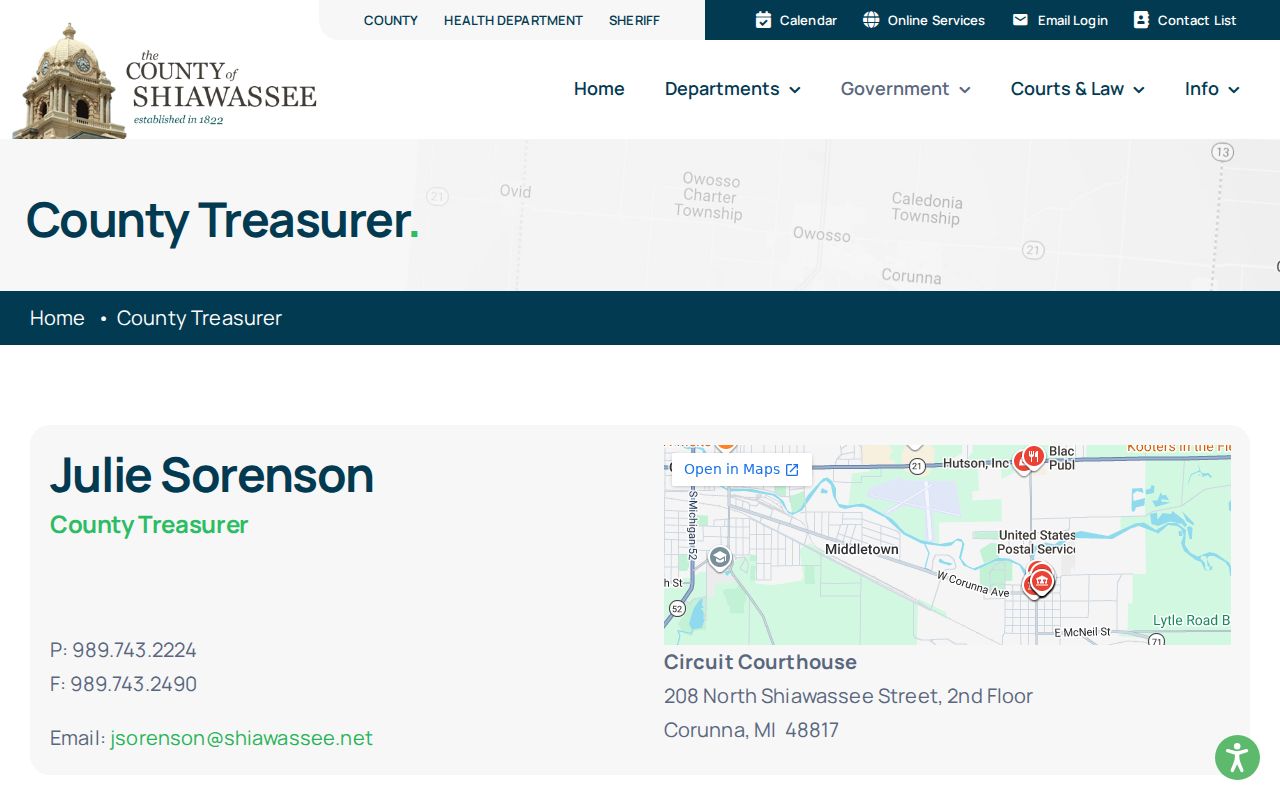
The Treasurer page separates lookup, payoff, payment, and foreclosure functions. For an official Shiawassee County payoff, call 989-743-2224 or visit 208 N. Shiawassee Street, second floor, Corunna, with the parcel, years, and requested status.
Foreclosure and Shiawassee Tax Evidence
Tax delinquency, mortgage foreclosure, and sheriff sale differ. Delinquent tax belongs with the Treasurer. Mortgage foreclosure may involve a court file, recorded notices, and the Shiawassee Register's sheriff-sale information. Search the later deed before concluding title changed. Sheriff sales run Wednesdays at 10 a.m. in the 35th Circuit Court lobby at 208 N. Shiawassee Street. The county requires a certified check for the opening bid. Details may not be ready until the day before, and none of this replaces a payoff, redemption check, or recorded sheriff's deed.
Contest a Shiawassee County Assessment
Start with the current assessment notice. Local deadlines depend on notice type and appeal type. Gather the Shiawassee parcel card, legal description, photographs, comparable evidence, and any corrections to property facts. The Michigan Tax Tribunal hears qualifying valuation, taxable-value, and exemption appeals after the applicable local steps. Use the Michigan Tax Tribunal portal for forms.
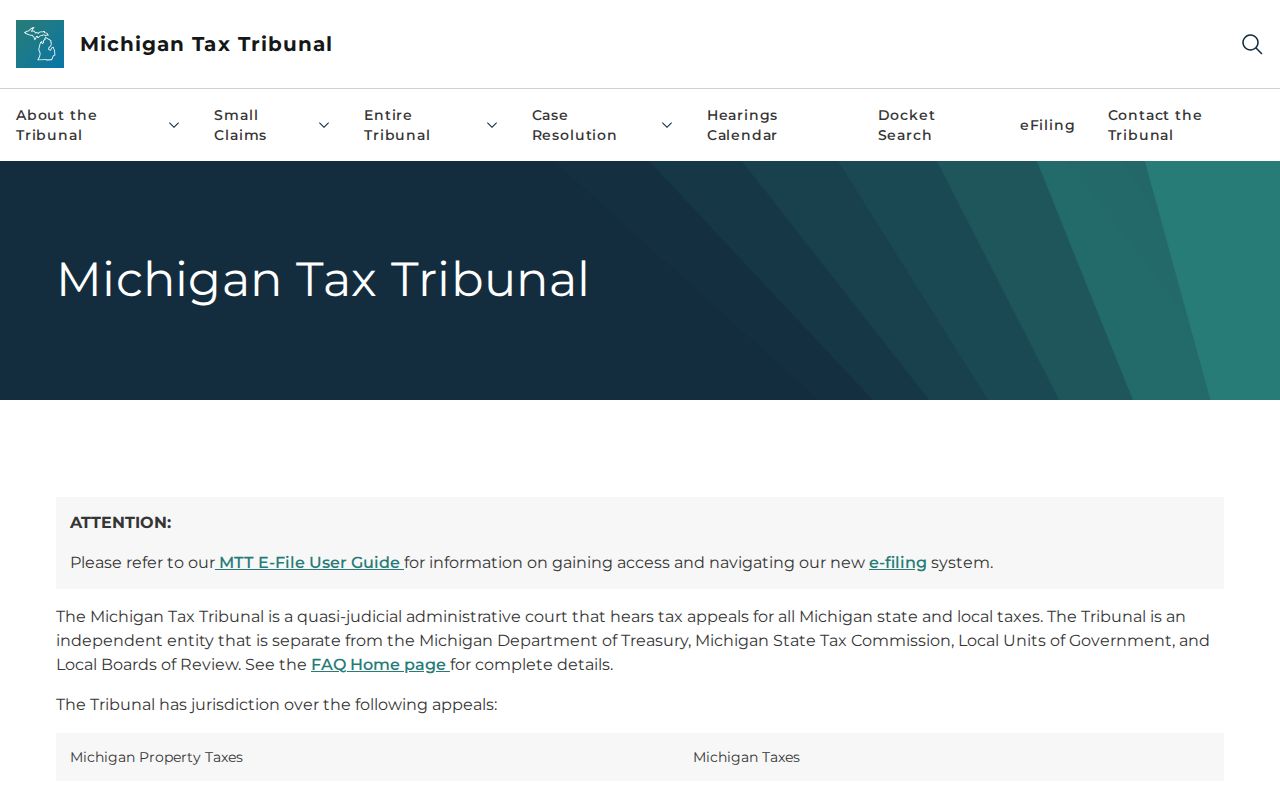
The state page identifies the petition and division that match the dispute.
Use the notice deadline. No universal county date was established. Follow the date and local review route printed on the current notice.
Request Shiawassee Tax Records Offline
BS&A cannot answer every question. Some years and details never reach the screen. Call County Equalization at 989-743-2263, and also contact the assessor for the municipality where the parcel sits. Request the parcel card or roll by APN, owner, local unit, and tax year. Equalization keeps countywide ownership, address, legal-description, valuation, tax, millage, and exemption data. The originating assessor file may still sit with the local unit.
Payment questions go to a different office. For payment history, delinquency, payoff, or foreclosure status, call the county Treasurer at 989-743-2224. Say exactly what you need: a current balance, past payments, a certified payoff, or foreclosure information. An online payment service may add a convenience charge. So confirm the amount and the payment channel before relying on any figure shown on a screen.
Michigan FOIA reaches records that are never posted online. It can seek an existing assessment roll, an archived tax card, or another public-body record, subject to exemptions and fee rules. Name the unit, the parcel, the years, the record, and whether you want to inspect it or receive copies. FOIA does not obligate an office to build a new analysis or answer a tax question for you.
Good records management pays off later. Save the tax year, municipality, parcel number, owner and taxpayer forms, assessed value, SEV, taxable value, PRE field, levy, payments, and the retrieval date. A later screen may reflect a new year, a transfer, a payment, or a correction. A dated record log is vital when you compare notices, verify a payoff, or build an assessment appeal. Keep the proper local and state record in hand.
County and local duties are split. That matters when a tax search looks incomplete. Equalization assists the 21 local governmental units and maintains the ownership, address, legal-description, valuation, tax, millage, and exemption data. A city, township, or village assessor may still hold the original field card, inspection notes, or an earlier local roll. Ask which unit supplied the assessment on display and which office keeps the year you want. Never assume every detail is centralized at the courthouse.
Keep each year intact when comparing tax records. For the same parcel and year, record AV, SEV, taxable value, and PRE or exemption status. Also record local unit, school district, millage context, levy, payment dates, and balance. Then note the deed recording date and any known physical change. Comparing values across years without their assessment context can mislead. A Proposal A uncapping, an exemption change, a correction, or an improvement can look like a mysterious jump.
Delinquency demands a status check with whichever collector holds the account now. Local units may collect current taxes through their winter deadline. After March 1, delinquent amounts move to the county under the documented local practice. A BS&A screen is a useful lead, but a certified payoff should come from the Treasurer whenever money or foreclosure timing is at stake. State the exact tax years, and ask whether interest, administration charges, or later payments are included in the quoted figure.
The PRE field is one part of the record. It is not a shortcut to legal ownership or residence facts. Michigan Treasury administers PRE resources and audits, while the local assessor processes the parcel's status. The state audit material identifies Form 4632 and a 30-day response within the covered audit process. Anyone responding to an actual notice should follow that notice and the current state instructions, supply the requested proof, and preserve the filing date. The deed may help show transfer timing, but the assessor decides the exemption entry.
Assessment disputes turn on the record and the required review path. Before filing, check the parcel's factual data, classification, legal description, value year, and comparable evidence. Photographs, sale information, and documented property conditions can support the stated issue, though the right evidence depends on the claim. No single Shiawassee deadline governs every appeal. So the date on the current assessment notice and the local Board of Review instructions control the first step. Michigan Tax Tribunal materials then identify the proper division and petition for a qualifying appeal.
Do not merge tax foreclosure with mortgage foreclosure. The Treasurer and the delinquent-tax process handle unpaid property taxes. Mortgage foreclosure runs through recorded lender instruments, a court case, published notice, and sheriff sale. Land-bank ownership can appear later on BS&A, as the Mallard Circle example shows. Yet a recorded transfer is still needed to trace how title moved. Keep the tax balance, foreclosure status, redemption evidence, and the resulting deed as separate records.