
Read the Shiawassee County Owner-of-Record Card
Shiawassee County Equalization keeps ownership, address, legal-description, value, tax, millage, and exemption data for 21 local units, and its BS&A card offers the present administrative snapshot. Read the fields together. One name or address rarely settles every ownership question.
| Property Owner | The person, trust, estate, company, or public body listed on the roll |
|---|---|
| Taxpayer | The party to whom the tax record is assigned |
| Mailing Address | Where tax notices go, which may be outside the county |
| Situs Address | The physical property location used for the parcel |
| Parcel Number | The stable key for matching assessor, GIS, and deed research |
| Legal Description | The land description used to test whether records refer to the same property |
One official example card for 1485 N Mallard Circle names the Shiawassee County Land Bank Authority as owner. The mailing address sits in Corunna. The situs sits in Owosso. That single card shows why owner, taxpayer, mail destination, and property location are separate fields on every Shiawassee County property records card. Open the Shiawassee County BS&A source represented below.
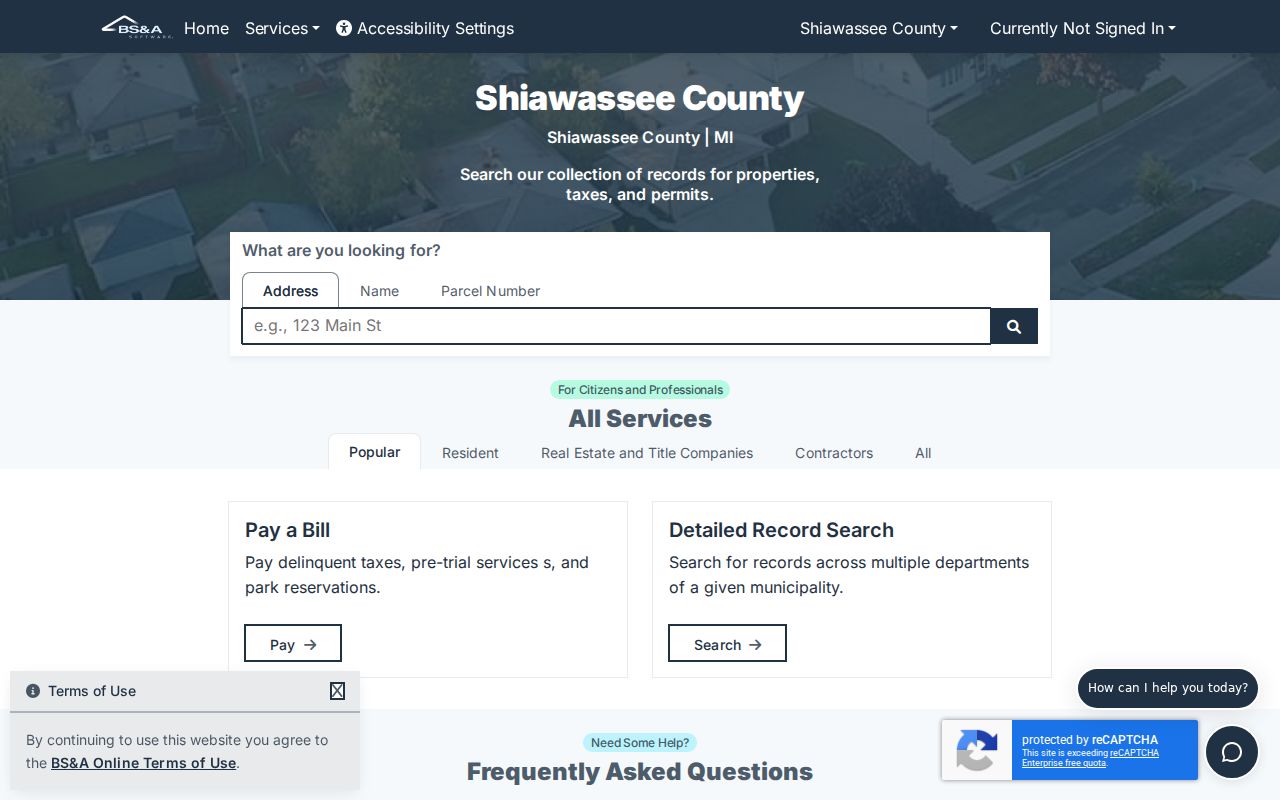
The BS&A service hub shows where a current owner search begins. A specific card still must be matched by APN and situs.
Check How Current the Shiawassee Owner Record Is
Shiawassee County publishes no fixed turnaround for owner updates. Treat the assessment roll as a dated administrative record. That matters most after a closing, probate transfer, land-bank conveyance, or municipal change. Note the tax year and access date BS&A displays for the parcel.
Recent-sale gap. The roll can lag a newly recorded deed. The newest matching deed is the better current-owner evidence.
When names conflict, do not estimate the delay. Call Equalization at 989-743-2263 or the local assessing unit and ask whether the owner card for that APN has been updated.
Separate Shiawassee Mailing and Situs Addresses
The situs marks where the parcel physically sits. The owner or taxpayer mailing address marks where notices go. The two diverge whenever an owner lives elsewhere, or a land bank, estate, trust, or company holds the property records entry. So a Corunna mailing line never turns an Owosso parcel into Corunna land.
Confirm identity with the APN and legal description. Unit selection matters in Shiawassee County records. Owosso and Owosso Township are distinct. Durand-area postal geography can also stray from municipal lines after annexation.
Confirm Shiawassee County's Current Owner
Treat the parcel card as the starting record and the latest recorded conveyance as the confirmation record. Each source has a different role, and their update schedules can differ.
- Search BS&A by address or parcel number and record the Property Owner, taxpayer, situs, mailing address, and APN.
- Use the owner name and a recent year range in the CountyFusion grantor-grantee index.
- Open the newest deed and match its legal description or parcel reference to the BS&A card.
- If an entity is named, check Michigan LARA for the exact entity name and registered-agent context.
- Owner of record
- The party named in the current administrative or recorded ownership record.
- Assessment roll
- The local tax record used to list the current owner, parcel, values, and related fields.
- Situs
- The physical property address, distinct from the tax mailing address.
- Recording lag
- The interval in which a deed may be recorded before another system reflects the transfer.
Use the Latest Shiawassee Grantee Entry
The Register of Deeds index runs by grantor and grantee name and year. Liber and Page serve as an exact image locator. Search the roll's current owner as grantee. Narrow to the likely transfer period and compare the land description. The public page describes indexes and images from 1953 forward. The office history gives 1954 as the computer-index start. Consult the county-linked CountyFusion search shown below.
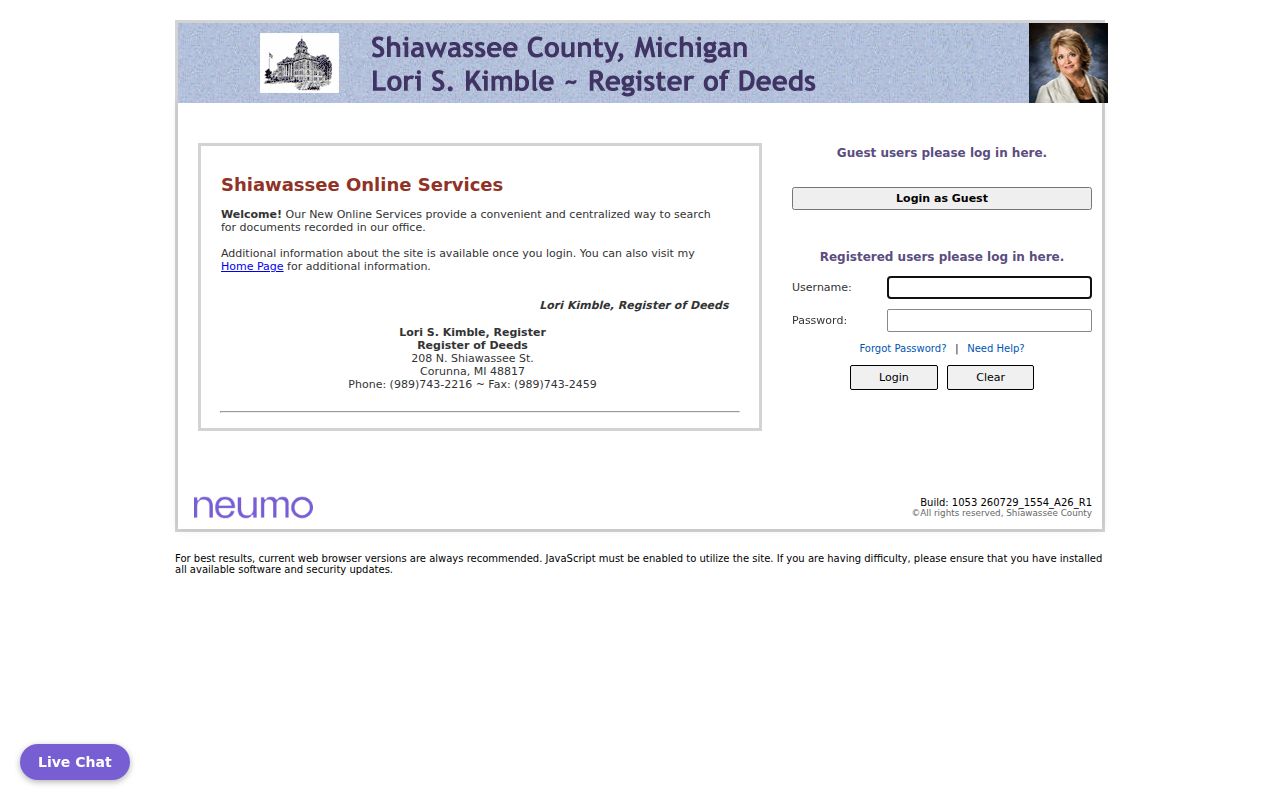
The Shiawassee County portal sets the online path, and the deed image with its matching parcel description confirms the property records entry.
Interpret Shiawassee LLC, Trust, and Estate Owners
A current owner field may show a legal entity. It may also list a trustee, estate, or public authority instead of a resident's name. Keep the exact punctuation and suffix. Michigan LARA's corporations system adds formation, status, registered-office, registered-agent, and filing context for a company. Even so, it cannot replace the deed that conveyed this parcel.
Estate ownership can call for a recorded death certificate, probate order, or administrator deed. The Register records those instruments. The Probate Court at 110 E. Mack Street handles estates and property-assignment proceedings. Sealed or protected material stays private even when land is involved.
Verify a Shiawassee Owner Without the Portal
BS&A sometimes lacks the card or prior year needed. In that case, ask Equalization for the existing roll by municipality, parcel, owner, and tax year. The relevant city, township, or village assessor can help too. Michigan FOIA can request an existing nonexempt county record in writing. It does not force staff to build a new ownership conclusion.
For the recording side, visit the Register on the first floor at 208 N. Shiawassee Street, call 989-743-2216, email rod@shiawassee.net, or mail a request. Include names, approximate year, APN, legal description, and Liber/Page when known. Copies run $1 per page, and certification adds $5.
Monitor New Shiawassee Recordings by Name
The Register links a free Property Fraud Alert service. It watches for a subscriber's name on newly recorded documents. It works best after the current owner has been verified. Name variations, entity names, trusts, and same-name parties can still cause missed or unrelated alerts.
If a notice arrives, pull the actual recorded image. Compare its APN, legal description, parties, signatures, and recording data. An alert is a prompt to inspect a filing. It is not a title policy or a finding of fraud.
Preserve Shiawassee Current-Owner Evidence
A result is only useful if you can reproduce it. Write down the municipality. Include the exact address or parcel number, the tax year, and the date you viewed the record. Record every field on the parcel card. Then note the deed's parties, recording date, document type, and Liber/Page or instrument number. Add image availability and the legal description. That way a later portal refresh cannot hide which version of the tax roll you consulted.
Choose your verbs with care. BS&A lists an owner. A deed names a grantee. GIS depicts a parcel. None of those, standing alone, is a legal title opinion. If a purchase, an estate, or a boundary dispute turns on who holds title, a qualified title professional can examine exceptions. Those exceptions sit beyond this basic comparison of property records.
An index row and a recorded image also carry different weight. Open the deed itself and match the land description. Two people sharing a name can appear in the same year's deed records.
Choose the Shiawassee Office for a Conflict
Route each problem to the office that owns it. A wrong roll owner or a mailing-address mismatch belongs with Equalization. So does a missing tax year or a local-unit question. The local assessor can help there too. An index, recording, image, Liber/Page, conveyance, or recorded-description question belongs with the Register of Deeds. The Treasurer handles current and delinquent tax bill balances, not title identity.
Probate adds one more layer. Probate may have changed the owner. The Probate Court file can explain the authority behind a sale or assignment. But the recorded order or deed is the document you match against land records. A permit applicant or contractor may not be the parcel owner. A city permit is context, not proof of ownership.
Michigan FOIA is a fallback for existing nonexempt administrative records. It does not replace court rules or the Register's ordinary copy service. Name the office and the parcel. Give the date range, the record type, and the format you want.
Use Shiawassee Current-Owner Data Lawfully
A public owner or taxpayer mailing address can support a property-specific notice, purchase inquiry, boundary question, or estate matter. It does not establish who lives there. A Safe at Home substitute address must never be reverse-engineered or republished. Court redactions and sealed probate records stay protected.
Lawful use. Use current-owner information for legitimate property research. Never use it to target, stalk, intimidate, or harm a person.
The Shiawassee owner-finding method covers how to start with nothing but an address.
Write down what the parcel card shows before you rely on the mailing field. Note the municipality, parcel number, tax year, access date, owner spelling, and taxpayer label. Also note whether the situs address differs from the mailing destination. That habit preserves the context the database supplied. It also cuts the risk of mistaking a notice recipient for a resident.
After a fresh sale, work the grantee side of the deed index. Use the buyer's name and a narrow recording range. Open the image and compare the legal description carefully. Some deeds convey several parcels. Others convey only part of one. List each referenced APN or description separately. Do not treat the buyer as owner of everything nearby.
Joint names, survivorship language, trusts, and estates turn on the wording of the instrument itself. A recorded death certificate or probate order can bridge a change after death. The county Register records that proof. But it will not draft a replacement deed or advise how title should be held. Probate staff face the same limit and cannot give legal advice.
An LLC listing calls for one more step. The Michigan corporation record may show status and a registered agent. It says nothing about occupancy. It does not supersede the deed. Search the entity name exactly as written. Keep its filing context, and use a lawful contact route for a genuine property matter.
Owner data shifts after corrections, transfers, and assessment updates. Recheck it close to any decision. When legal rights or a major transaction hang on the answer, order the recorded copies you need. Then get a qualified title examination rather than treating the public parcel card as final.